Utah Has Built the Programs. Now It’s Building the System.
05.18.26
Utah doesn’t do things incrementally. Since 2018, the state has passed a wave of legislation — SB 131, HB 280, SB 122, SB 195, and more — establishing governance structures, cross-agency initiatives, and dedicated investment in youth apprenticeship. It created a Youth Apprenticeship Governance Council with staff support from the Utah System of Higher Education’s Talent Ready Utah and established a pipeline of employer-led programs that has grown to more than 2,300 youth participants. In fiscal year 2025 alone, the state added 53 new programs and 23 new occupations.
Utah’s selection for the Apprenticeship America cohort of the federally-funded Future Ready Apprenticeship Center reflects a state that has done the foundational work — and is now ready for the next, harder challenge: scaling a collection of strong programs and thoughtfully built scaffolding into a coherent, statewide system where every apprenticeship opening is filled.
TRAC and the Employer-First Model
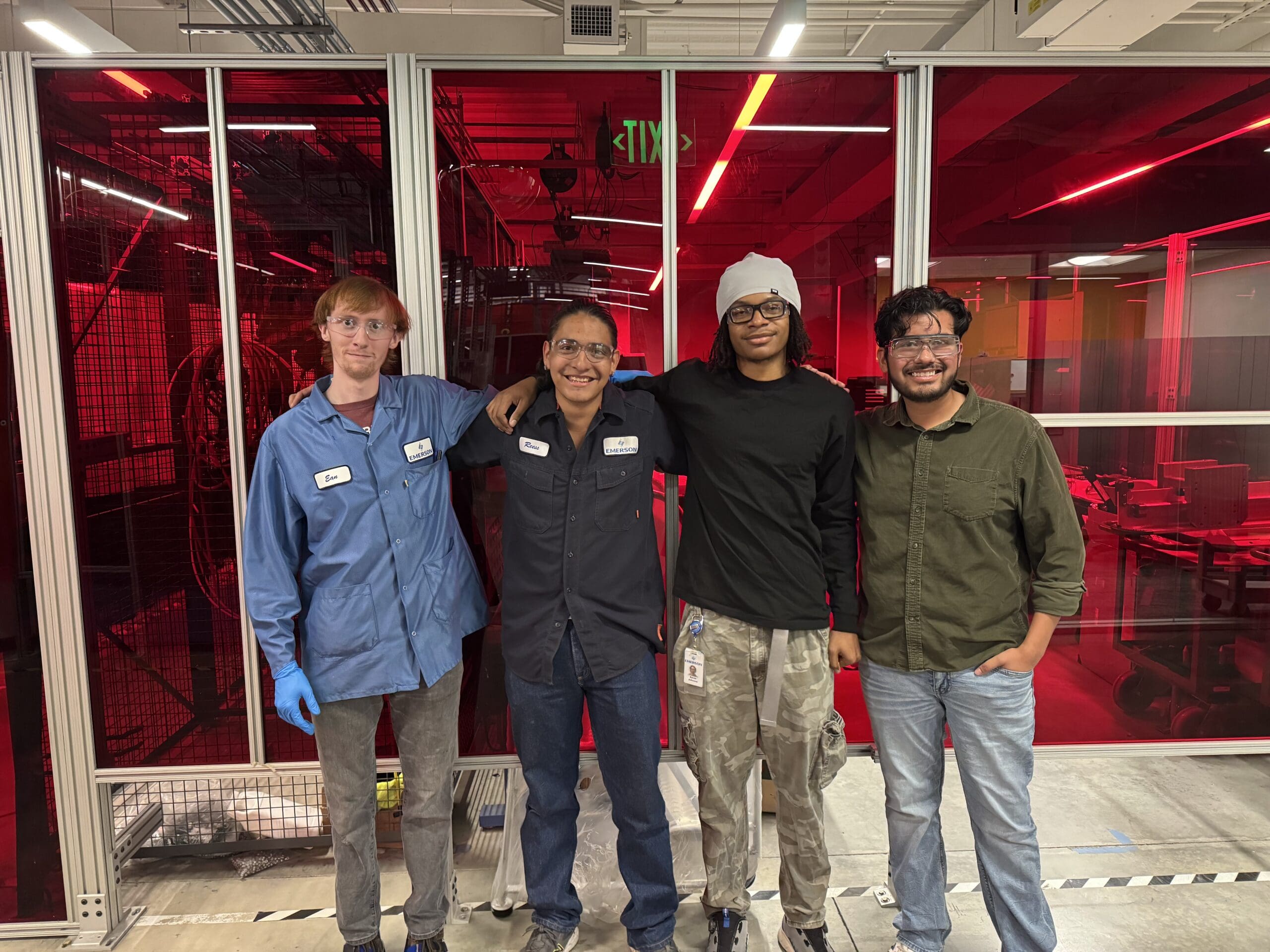
At the center of Utah’s youth apprenticeship success is the Talent Ready Apprenticeship Connection (TRAC) — a work-based learning model that employers co-design. Companies like Stadler US, Doppelmayr, Utah PaperBox, and ACT Aerospace don’t just participate in TRAC; they shape it. This employer-first orientation has produced programs aligned with workforce demand rather than retrofitted to it, making Utah’s apprenticeship ecosystem one of the most industry-credible in the country.
“States like Utah show what’s possible when employers and policymakers are genuinely aligned on a shared goal,” said Ryan Gensler, Executive Vice President at CareerWise. “TRAC is a proven model. The governance infrastructure is in place. The Apprenticeship America cohort gives Utah the structure to scale these models and programs statewide.”
Advanced manufacturing and skilled trades are the backbone, but Utah’s ambitions extend well beyond them. Healthcare, life sciences, hospitality, energy, and technology are all part of the state’s expansion roadmap. Pathways in healthcare and hospitality are actively being developed, while energy and tech programs are emerging in response to the state’s rapidly evolving economic mix. Utah’s goal is to create stackable credentials across all these sectors, so high school apprentices build toward postsecondary credentials and career advancement, not just an entry-level job.
Legislation as Infrastructure
Few states have used legislation as aggressively as Utah to build apprenticeship infrastructure. The creation of the Statewide Youth Apprenticeship Governance Council — codified in statute — gives the system something most states lack: a formal, durable accountability structure that persists across administrations. The Council includes representation from education, workforce, industry, and the Governor’s Office, ensuring that apprenticeship remains a cross-sector priority rather than a siloed initiative within any single agency.
Governor Spencer J. Cox has been a consistent champion of this work, which is why Utah is also engaged in the National Governors Association Policy Academy, using the technical assistance provided to continue tightening alignment across its education and workforce systems. The state sees governance not as bureaucratic overhead but as the connective tissue that lets programs communicate, data flow, and accountability land somewhere specific.
Where the Work Remains
Utah is admirably candid about the gaps. Ninety percent of industry engagement is concentrated along the Wasatch Front, leaving rural regions underserved and disconnected from programs thriving in urban corridors. The state is actively prioritizing rural expansion, but the geographic and capacity challenges are real — longer commutes, lower employer density, and fewer intermediaries to bridge students and sponsors.
Data is another area the state seeks to improve. Utah’s data systems are currently siloed across agencies, making it difficult to track youth apprenticeship outcomes comprehensively or demonstrate the return on investment to employers and policymakers. The state has made progress — including establishing a youth apprenticeship course code — but a full cross-agency data system remains a goal. These are exactly the kinds of structural challenges that the Apprenticeship America cohort is designed to help states work through — not by prescribing solutions, but by providing technical assistance, peer learning, and structured planning support.
“Utah is at a moment where we can move from building programs to building a system,” said Amy Andre, State Work-Based Learning Intermediary at Talent Ready Utah, Utah System of Higher Education. “With a proven model in TRAC, strong legislative support, and real alignment across education and workforce, we’ve built a strong foundation for youth apprenticeships. We’re excited to take the next step through this Center — moving from strong programs to a coordinated, statewide system, scaling what’s working, and fundamentally shifting how education and workforce connect for young people.”
What’s Next
As part of the Apprenticeship America cohort, Utah will focus on operationalizing its Governance Council, developing a unified cross-agency data system, and building the regional infrastructure needed to extend its strongest programs beyond the urban core. The state’s vision — a comprehensive, statewide youth apprenticeship system with multiple entry points, broad access, and seamless pathways from high school through postsecondary credentials — is clearly articulated. The Center is where it becomes a plan.
Learn more about the Future Ready Apprenticeship Center and the Apprenticeship America cohort in our press release.