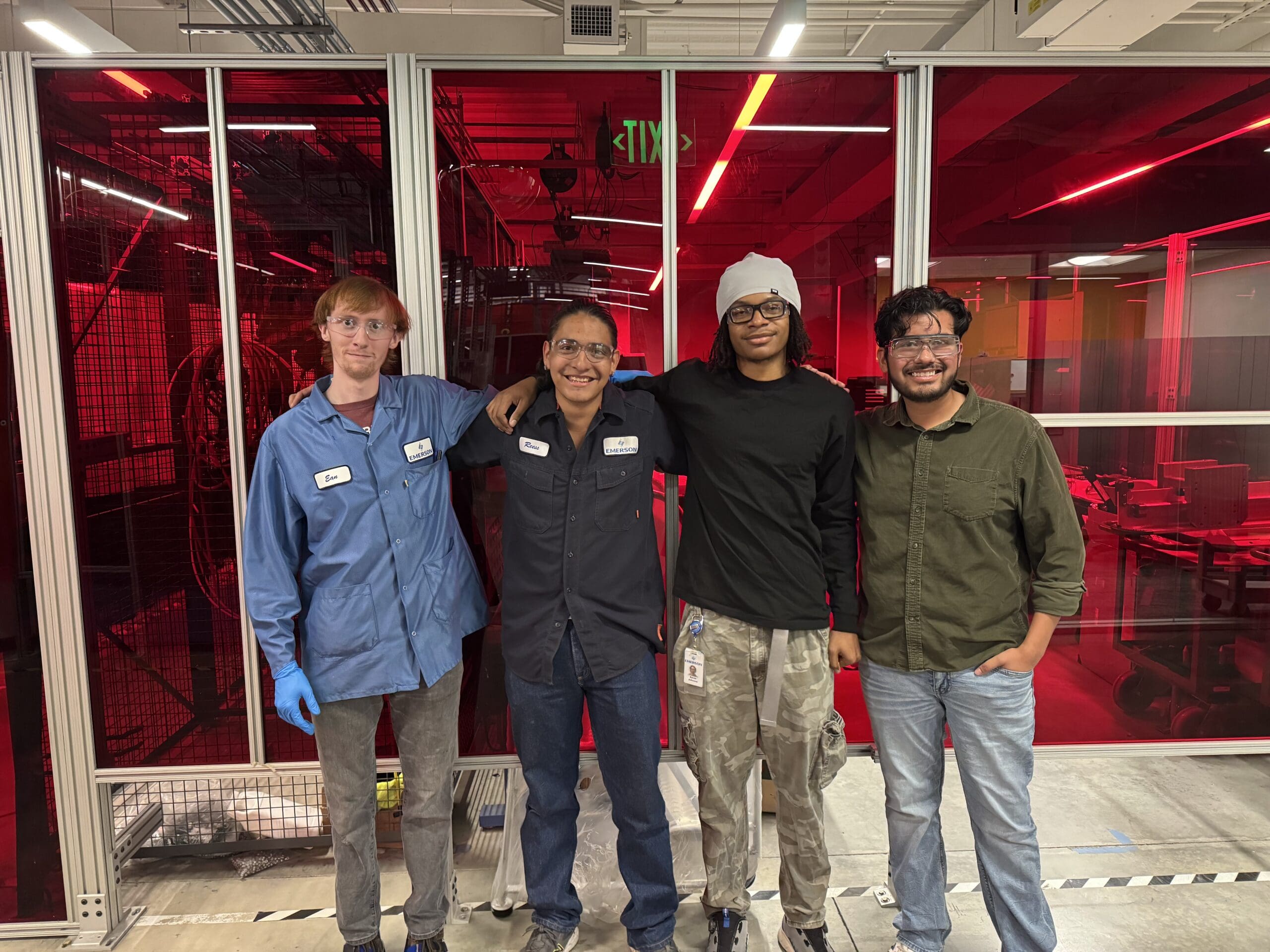
A new apprentice’s guide to belonging at work
Almost every new apprentice carries the same unspoken question into their first week. A few brave souls even say it out loud during orientation: what can I do to fit in here? Do I actually belong?
It shows up as a knot before walking into the building, as overthinking a simple email, as staying quiet in a meeting when you actually have something to add. Most of what feels like imposter syndrome in that first month isn’t really about whether you’re good enough. It’s about not yet knowing the unwritten rules every workplace runs on: who to ask for advice, what “casual Friday” actually means at this job, whether it’s okay to ask a question twice. That kind of unfamiliarity fades fast once you have the missing information. It is not a verdict on whether you belong.
You Don’t Have to Build Belonging Alone
Even if you’re the only apprentice in your department or location, you don’t have to build belonging by yourself. Apprentices who go through orientation with a cohort consistently find their footing faster than apprentices who go it alone, and the connection often starts with something as small as a game: CareerWise’s orientation uses an icebreaker called Networking Bingo for exactly this reason, because a structured, low-stakes excuse to talk to a stranger works better than just being told to network.
The same logic carries past orientation. Reaching out to another apprentice in your cohort or on your job site is one of the fastest paths to feeling like part of something, often faster than waiting for the company culture to trickle down to you. It can be as simple as inviting someone to eat lunch together, asking a quick question about company norms over Slack or Teams, or thanking a peer for asking the question in a meeting that you were too nervous to ask yourself.
Followship, Not Invisibility
It can be tempting to do your job quietly and avoid drawing attention if you make a mistake. Or the opposite pull might hit: if you were coached to lead on your high school sports team or student council, it can feel natural to want to speak for your whole cohort of apprentice peers. Inside your new workplace, CareerWise’s Learning Solutions team recommends a different approach: followship. Show up with curiosity instead of ego, and learn how your new workplace team actually functions before trying to change it. That doesn’t mean staying quiet or invisible. You still need to ask questions, voice your perspective, and push for clarity when it’s lacking. Followship is about sequence, not silence. Understand how things work first. Then you’re in a much stronger position to help make them better. Employers genuinely want the fresh perspective apprentices bring. Those ideas just land hardest once they’re grounded in work you actually understand, not aimed at a process you’ve been part of for a week.
Learning the Unwritten Rules Without Losing Yourself
Learning a workplace’s unwritten rules is not the same as erasing who you are to fit them. You can learn that a particular team values written updates over verbal ones, or that your supervisor prefers questions batched instead of one at a time, without giving up your sense of humor, your interests, or your background. Small adjustments like these are also chances to build real relationships, not just fit in.
Some of the fastest bridges across a generational or cultural gap come from small, deliberate moves, like bringing up a show, a reference, or a shared interest with a colleague twenty years older. It treats your supervisor as a person first, and it works precisely because it’s still you doing the connecting, not a version of you built to match the room. A conversation that starts with a clarifying question can end with swapping weekend plans, or laughing together about something a client said earlier that day.
Mistakes Are Part of the Deal
The apprenticeship model assumes you will make mistakes. That’s not a flaw in the design, it’s the design: on-the-job training means learning by doing the real work, with feedback built in along the way. A fixed mindset treats a mistake as proof you don’t belong: I’ll never be that smart, I know best, I give up. In contrast, a growth mindset treats it as information: mistakes help me learn, feedback is valuable, I improve with practice. The growth mindset isn’t naturally easier. It’s a skill, and apprenticeship is one of the few places built specifically to practice it.
Everyone wants to feel appreciated, and it’s okay to say so. When your supervisor gives you clear feedback and tells you they believe you can improve, you can thank them for it: “I appreciate you taking the time to show me a better way to do this, and for believing I could figure it out.” Later, once you’ve gotten it right, you can circle back: “I got this done because you were patient with me and gave me feedback I could actually use. Thanks for believing in me.”
What It Looks Like When It Clicks
There’s a real, if unofficial, moment when an apprentice stops feeling like an outsider trying to prove themselves and starts operating like a valued member of the team. It doesn’t usually arrive all at once. It shows up in smaller signs: a coworker asking your opinion before you offer it, a supervisor handing you something without re-explaining the basics, a meeting where you speak up because you have something to say, not because you’re trying to prove you belong in the room. You don’t have to engineer that moment. You have to show up, ask the questions, take the feedback, and give it time. This is what followship was building toward the whole time: not staying quiet forever, but earning the standing to speak up because you did the work of understanding the system first.
You’ll Get There
That’s really the whole secret. Belonging isn’t something you arrive already holding. It’s something you build, day by day, mostly by showing up as yourself, staying curious, and letting the growth mindset you’ve been practicing since your first mistake do its work. Every apprentice who’s ever felt out of place in week one has a story about the moment the imposter feeling faded, and yours is already underway. Give it time. Before long, you’ll look back on this first stretch and barely recognize how unsure you felt, because you won’t be that person anymore. You’ll be the one showing the next new apprentice around.