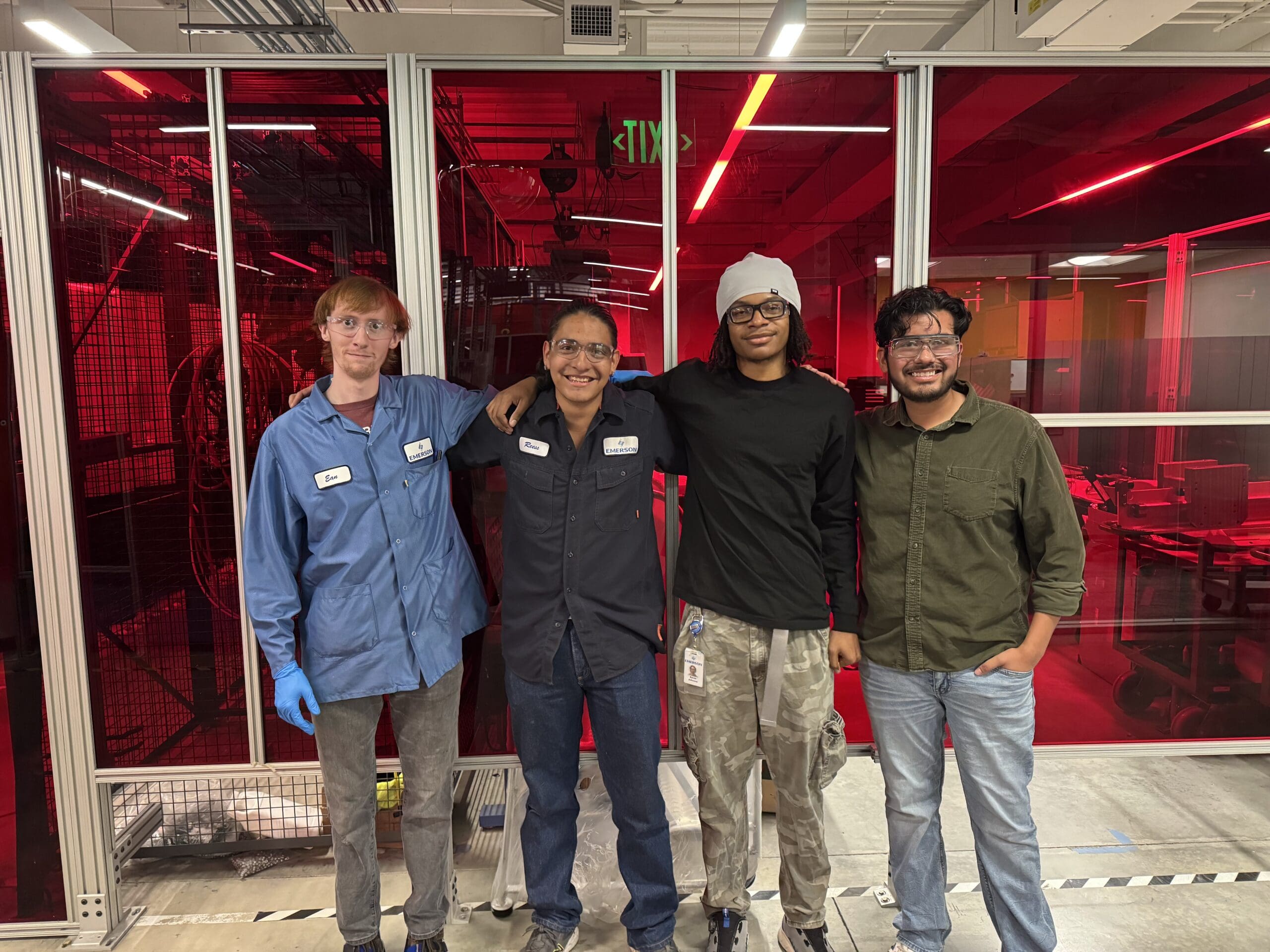
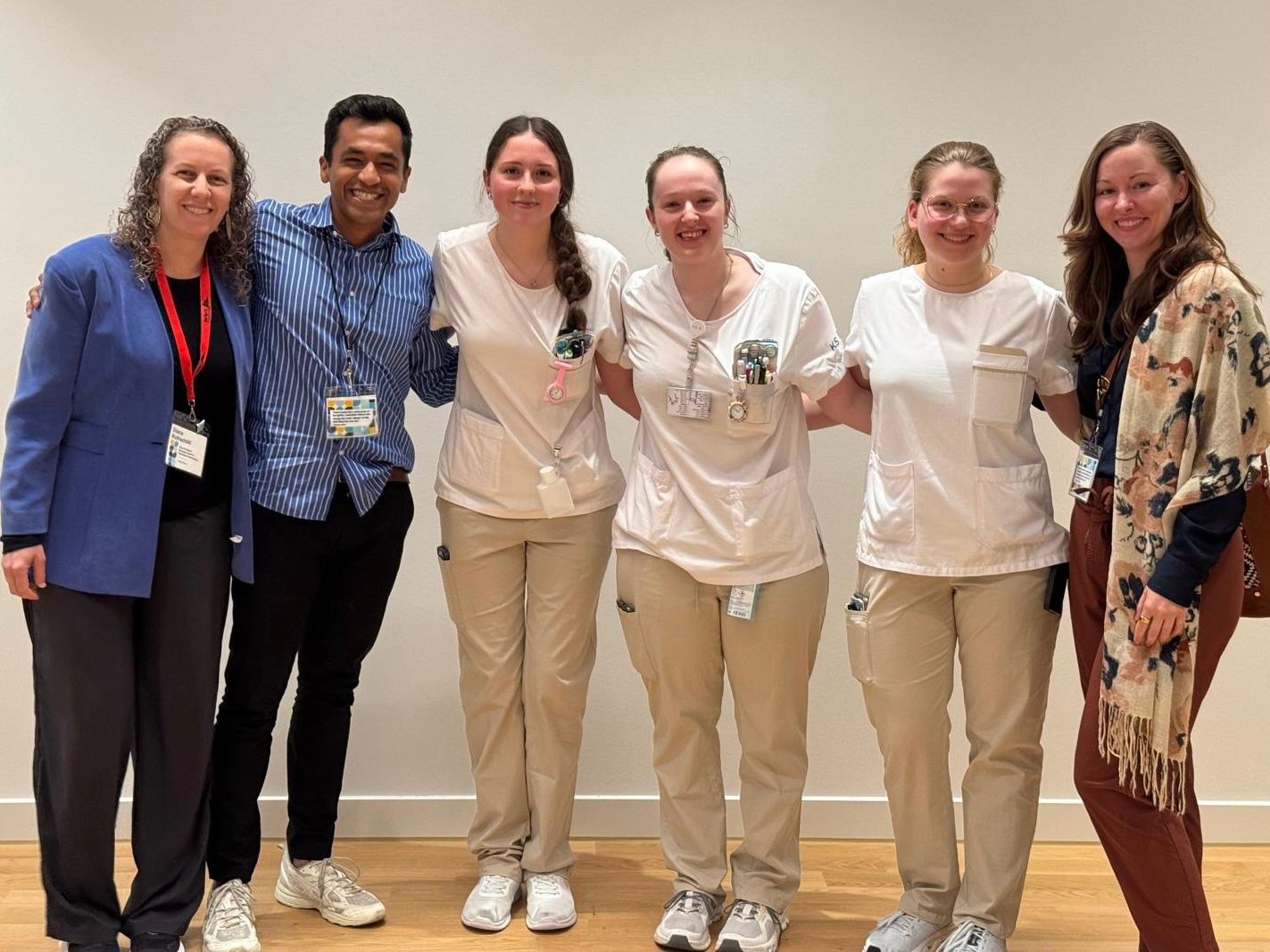
Ask CareerWise’s Learning Solutions team what question comes up first at every orientation, whether the room is full of nervous new apprentices or the supervisors about to meet them, and the answer is almost always some version of the same thing: Will I belong here? Apprentices ask it about the team they’re about to join. Supervisors ask it too, quietly, wondering whether they’ll know how to make room for someone this new to the working world. It’s the question underneath the paperwork, the schedule, and the code of conduct, and how an employer answers it, deliberately or by accident, shapes everything that follows.
Experienced apprentices, looking back on their first year, often describe the moment that question gets answered as a transformation: the shift from feeling like a guest in someone else’s workplace to feeling like a genuine part of the team. That shift doesn’t happen on its own.
“Belonging” and “psychological safety” get used interchangeably, but they aren’t the same thing. The difference truly matters in an apprenticeship.
Belonging is feeling accepted: a sense of fitting into the team.
Psychological safety is feeling safe enough to make a mistake in front of that team.
An apprenticeship runs on mistakes. The entire model is built around learning by doing real work under real supervision, which means a new apprentice will get something wrong, probably in their first week. And the first time they get it right, it won’t be optimized, efficient, or even close to perfect. Employers who get belonging right aren’t the ones who avoid that moment. They’re the ones who’ve built the safety net under it ahead of time. Build that net well, and belonging stops being something an apprentice hopes for and becomes something they can count on.
Belonging Runs on Social Capital, Not Luck
That safety net is built out of social capital, not networking in the sense of working a room to get something out of it, but the deliberate work of creating real relationships and real opportunities for apprentices to build them.
Social capital refers to the relationships and networks you have and your ability to use those connections for information, resources, and opportunities: career advice, emotional support, or, in the future, a job interview.
A transactional connection is one you make because you need something, says Kai Zander, CareerWise’s Director of Learning Solutions. A genuine connection keeps paying off in ways neither person planned, long after the apprenticeship ends. Employers don’t generate genuine connection among employees by hoping for it. They get it by building the structures that make it likely: regular check-ins, cross-team introductions, and time set aside that isn’t tied to a deliverable. That’s the kind of return no orientation checklist can manufacture on its own. It has to be built, on purpose, one relationship at a time.
The Supervisor Is the Program
An orientation deck, however well designed, only sets the tone for day one. The daily experience of building and reinforcing a sense of belonging is set by whoever the apprentice reports to. If a program manager builds a strong orientation but the assigned supervisor treats the apprentice as an inconvenience, that fragile sense of belonging evaporates by week two. That’s why CareerWise invests as much in preparing supervisors as it does in preparing apprentices. Zander and her colleague, CareerWise Senior Manager of Apprentice Experience Michael McDaniel, use empathy exercises in supervisor training that walk Gen X supervisors through what a Gen Z apprentice’s adolescence actually looked like: a generation raised inside smartphones and a pandemic. The exercise is designed to build understanding and clarity that Gen Z is not a generation that’s lazier or more fragile than the one before it. Supervisors who understand the gap set fairer expectations and are less likely to default to a sink-or-swim model built for a workforce that no longer exists. Get this part right, and psychological safety stops being an abstract goal from a training session. It becomes the reason an apprenticeship survives its first rocky week, and the reason someone stays for year two, and sometimes year ten.
Reframe the First Mistake
The clearest test of whether belonging is real comes the first time an apprentice gets something wrong in a way that matters. CareerWise trains supervisors to treat that moment as a first attempt at learning rather than a failure.
F.A.I.L. means First Attempt In Learning.
McDaniel, who works directly with apprentices and supervisors at CareerWise Colorado, has watched what happens when a supervisor shifts from correcting protocol to naming an apprentice’s potential: engagement changes almost immediately. He calls it a click. It might sound like:
“You have the potential to play an important role in modernizing our internal communications. What this draft is missing is a clear understanding of the audience. Let’s work together on how you can ask clarifying questions before and during a task.”
The apprentice hears that the supervisor believes in their capability, not just their compliance, and starts acting like it. That shift, from watching for what an apprentice does wrong to naming what they’re capable of, is F.A.I.L. put into practice, and it’s psychological safety doing its job: proof that a first attempt gets to stay a first attempt, not a verdict.
One Exercise That Makes It Concrete
One supervisor built a habit out of intentionally starting the kind of relationship that builds social capital, instead of leaving it to chance. He took a recommendation from Zander, sat down with his apprentice, and worked through Ikigai, a framework built around four questions that move a relationship past routine check-ins into real understanding of what motivates a person. He now does this with every new apprentice early, and repeats it later in the apprenticeship.
- What do they love? What lights them up outside of required tasks: a project they got excited about, a topic they bring up unprompted, something they’d do even if no one asked.
- What are they good at? Not just their assigned competencies, but the strengths a supervisor might not see in day-to-day tasks: sharp problem-solving, a natural ability to connect with people, an eye for detail that’s an asset somewhere beyond their current role.
- What does the team need? Where do an apprentice’s strengths actually create value? This is where a supervisor can help an apprentice see that their contributions matter beyond completing tasks.
- What can they build a career on? Which skills or interests, developed further, could translate into real opportunity: a promotion, a different role, a credential, a long-term path.
The point isn’t filling out all four answers perfectly. It’s that asking the questions, even loosely, creates the opportunity for an apprentice to be seen as a whole person with a future, not just someone executing a task list. Repeating the exercise gives both people a chance to surface what’s changed: new interests, new confidence, new direction. Come back to it six months in, and the answers are often different. That’s not a flaw in the exercise. It’s proof the apprentice is growing into exactly the kind of person the exercise was designed to find.
Knowing Whether It’s Working
Belonging isn’t a measurable KPI, and it doesn’t announce itself when it’s achieved. That can be unsettling for a supervisor who genuinely wants to get this right and isn’t sure how to tell if they are. The clearest sign psychological safety has taken hold is that nobody mentions it anymore. It’s just how the team operates. The signs that it’s missing are usually quiet too: an apprentice who stops asking questions they used to ask, who eats alone every day by choice, who shows up for mandatory tasks but never the optional ones, who communicates only by message when a quick conversation would be faster. None of these on their own means something is wrong. Together, and sustained over weeks, they’re worth a direct check-in rather than a wait-and-see.
The Bottom Line
CareerWise’s role in all of this is to prepare and support the two people who will each navigate something unfamiliar: an apprentice learning how a workplace functions for the first time, and a supervisor who may be managing a teenager or young adult for the first time in their career. Getting the basics of inclusion, time management, and professional norms onto the table early means neither side is surprised by the other’s conduct later. Belonging, psychological safety, and the social capital an apprentice builds along the way aren’t three separate initiatives. They’re the same infrastructure, seen from three angles, and it only holds up if an employer builds all three on purpose.
Belonging isn’t something an employer waits to see happen. It’s infrastructure, and like any infrastructure, somebody has to build it on purpose. Once built, it lends stability to the entire experience. Get it right, and an apprentice doesn’t just finish a program. They become the kind of colleague who stays, grows, and one day builds that same foundation for the next apprentice who walks through the door.
Try It Yourself
Supervisors looking to start this conversation in their next one-on-one can try the prompt below with an AI tool like Claude or ChatGPT:
“I’m a supervisor preparing for a one-on-one with an apprentice on my team. Using the Ikigai framework- what they love, what they’re good at, what the team needs, and what they could build a career on- generate six open-ended questions I could ask to get to know them as a whole person, not just as someone completing tasks. Keep the tone conversational, not like an interview.”